AZAL
AZAL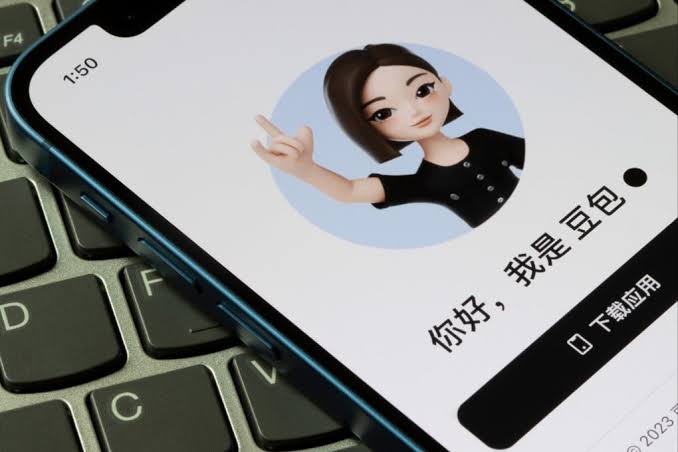
ByteDance and Alibaba have announced the suspension of custom AI agent creation features in their respective artificial intelligence platforms, Doubao and Qwen, as China prepares to enforce new regulations governing AI services that simulate human behavior and emotional interaction.
According to a report by the South China Morning Post, the move comes ahead of new regulatory measures aimed at limiting AI systems designed to form long-term emotional relationships with users while allowing productivity-focused AI services to continue operating.
Doubao and Qwen to End AI Agent Creation
Doubao, ByteDance’s AI assistant, informed users that its custom AI agent creation feature will be permanently discontinued starting July 15 as part of what the company described as “product function adjustments.”
The company also confirmed that all data related to these AI agents—including their content and conversation history—will no longer be accessible after October 15.
One day later, Alibaba’s Qwen announced that it would begin shutting down its human-like interactive AI agents and user-created AI characters starting July 10, with all remaining AI agent functions scheduled to be discontinued by July 15.
As a result, users will lose access to their AI agents, saved configurations, and previous chat history.
China’s New AI Regulations
The suspensions coincide with the implementation of new regulations introduced by the Cyberspace Administration of China (CAC) together with several government agencies.
The new rules target AI services capable of imitating human personalities, communication styles, and emotional interactions designed to establish ongoing emotional relationships with users.
However, the regulations do not apply to customer service chatbots, educational assistants, research tools, professional AI assistants, or question-answering systems, provided they do not encourage long-term emotional attachment.
Why China Is Tightening AI Rules
Chinese regulators say the new framework is intended to reduce several potential risks associated with emotionally interactive AI, including:
- The spread of harmful or extremist content.
- Personal data and privacy concerns.
- Mental health risks.
- Excessive dependence on AI companions.
- Protection of minors through stronger identity verification and usage controls.
The regulations are not intended to halt AI development altogether. Instead, China continues to support AI technologies focused on productivity, business applications, and industrial innovation while restricting AI products designed primarily as virtual companions.
AI Companions Face Growing Scrutiny
Before ByteDance and Alibaba, Tencent also removed a similar AI companion feature from its Yuanbao assistant earlier this year, signaling a broader industry-wide response to China’s evolving AI regulations.
Researchers have long warned that emotionally intelligent AI systems could encourage unhealthy psychological dependence while collecting large amounts of highly sensitive personal data. These concerns have increasingly attracted the attention of regulators worldwide, not only in China.
User Reactions
The decision has sparked widespread discussion among Chinese users. Many described their AI companions as an important source of emotional support, while others criticized the lack of simple tools to export or preserve conversation history before the services are discontinued.
As the new regulations take effect, China appears to be defining a clear direction for consumer AI: encouraging AI agents that improve productivity and efficiency while placing stricter limits on virtual companions designed to build long-term emotional relationships with users.
Vexiora Analysis
China’s latest regulatory move highlights a growing global debate over the role of emotionally intelligent AI. Rather than restricting artificial intelligence as a whole, Beijing appears to be drawing a distinction between AI that enhances productivity and AI designed to simulate human relationships.
This approach could influence future AI policies beyond China, as governments increasingly examine the privacy, ethical, and psychological implications of AI companions. For technology companies, the challenge will be balancing innovation with compliance while ensuring AI systems remain both useful and trustworthy.