AZAL
AZAL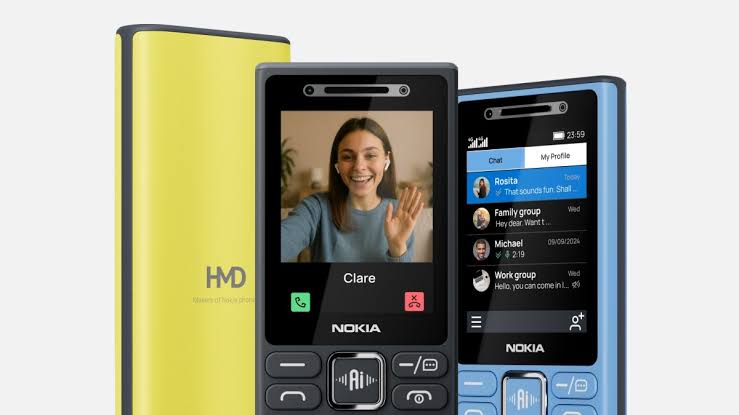
HMD Launches Four New Nokia Phones with AI Features
HMD has unveiled four new Nokia feature phones, showing that the company remains committed to the traditional mobile phone market while bringing artificial intelligence (AI) features to the lineup for the first time.
The new devices include the Nokia 200 4G, Nokia 210 4G, Nokia 215 4G (2nd Edition), and Nokia 235 4G (2nd Edition). They are designed for users who prefer simple phones but still want access to modern AI-powered features.
Built-in AI Assistant
One of the biggest additions is a built-in AI assistant that can be accessed through a dedicated AI button located in the center of the keypad.
Powered by Sikey AI, the assistant allows users to ask questions and perform basic phone functions using voice commands, bringing AI capabilities to traditional feature phones.
According to HMD’s official specifications, the AI service will be available free for 180 days. After the trial period, users will need a paid subscription to continue using the feature, and a smartphone is required to complete the subscription process.
Video Calling Support
The new Nokia phones also introduce Xpress Chat, which enables video calling using the built-in VGA camera. This adds a modern communication feature to devices that are primarily designed for simplicity and reliability.
Display and Hardware
The Nokia 210 4G and Nokia 215 4G (2nd Edition) feature 2.4-inch QVGA displays, while the Nokia 200 4G and Nokia 235 4G (2nd Edition) come with larger 2.8-inch IPS displays with the same resolution.
For photography, both the Nokia 200 4G and Nokia 235 4G include rear cameras, with the Nokia 235 4G offering a 2MP camera.
All four phones run S30+, pack a 1,450mAh battery, and support Bluetooth 5.0, a 3.5mm headphone jack, FM radio, and USB-C charging.
HMD has not yet announced pricing or availability for the new devices.
Analysis: Bringing AI to Feature Phones
HMD’s latest launch shows that the company is trying to modernize feature phones without changing what makes them popular: long battery life, simple controls, and reliability.
Adding an AI assistant gives users access to voice-powered help without requiring a high-end smartphone. While these AI features are expected to be more limited than those found on modern smartphones, they could make feature phones more useful for everyday tasks.
The inclusion of USB-C, 4G connectivity, and video calling also helps keep Nokia’s feature phones relevant as older mobile technologies continue to be phased out.
However, the requirement for a paid AI subscription after the free 180-day trial may reduce the appeal of the feature, especially for users who typically choose feature phones to avoid ongoing costs.
Overall, HMD appears to be taking a gradual approach by combining classic Nokia design with selected smart features, giving feature phone users a more modern experience while preserving the simplicity that many customers still value.